Case study · 2021–2024
DOJ Application Redesign for Accessibility and Usability
Modernizing a decade-old application through accessibility-led research, biweekly user forums, and phased redesigns of navigation, search, and workflow.
- Client
- U.S. Department of Justice
- Role
- HCD/UX and Accessibility Design Lead
- Governance
- Section 508 accessibility requirements and an iterative, user-centered delivery approach
Overview
Modernizing a decade-old application
The application had substantial usability problems and lacked Section 508 compliance and accessibility support. The redesign aimed to modernize the interface, improve the end-to-end experience, and better serve people with disabilities.
Research and collaboration
Keeping users in the design loop
Discovery combined feedback from existing users, customer leads, and visually impaired users. Biweekly forums brought users, customers, and the business analyst together to review iterations, provide immediate feedback, and adjust the direction.
Designs were also reviewed regularly with the development lead so accessibility and usability improvements remained technically feasible within the existing application.
Phased implementation
Delivering immediate improvements while planning deeper change
- Version 1: Prioritized high-impact improvements that could be implemented rapidly, moved the product away from its outdated interface, and established a more accessible front-end foundation.
- Version 2: Reserved more complex features for a later phase informed by the first rollout and continued user input.
Redesign 1
A compact, responsive navigation model
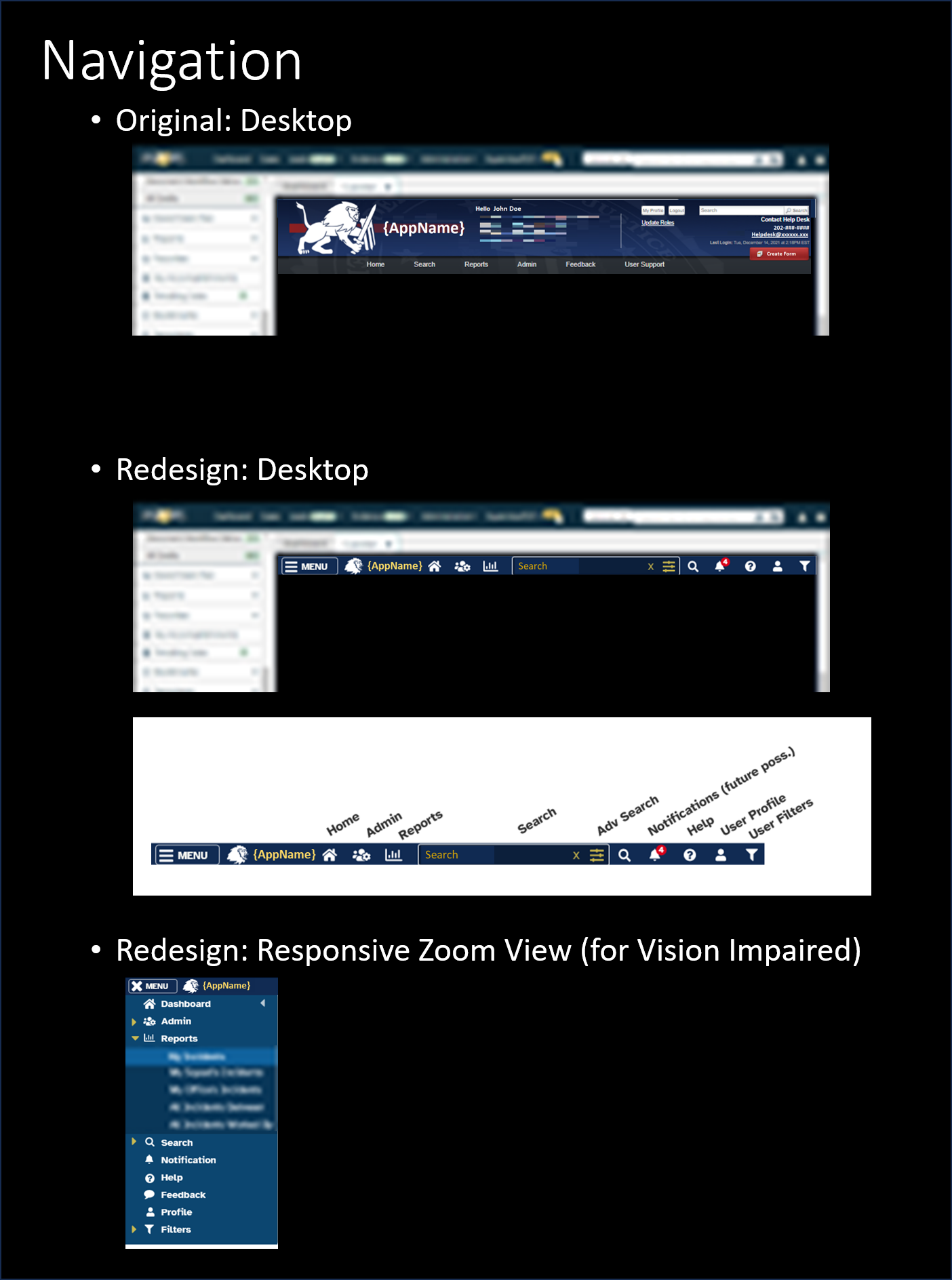
The original header consumed substantial screen space and became especially cumbersome when the application appeared inside another application. The redesign consolidated navigation into a slim bar and provided a vertical alternative for increased zoom.
Redesign 2
Turning 270-plus search options into contextual choices
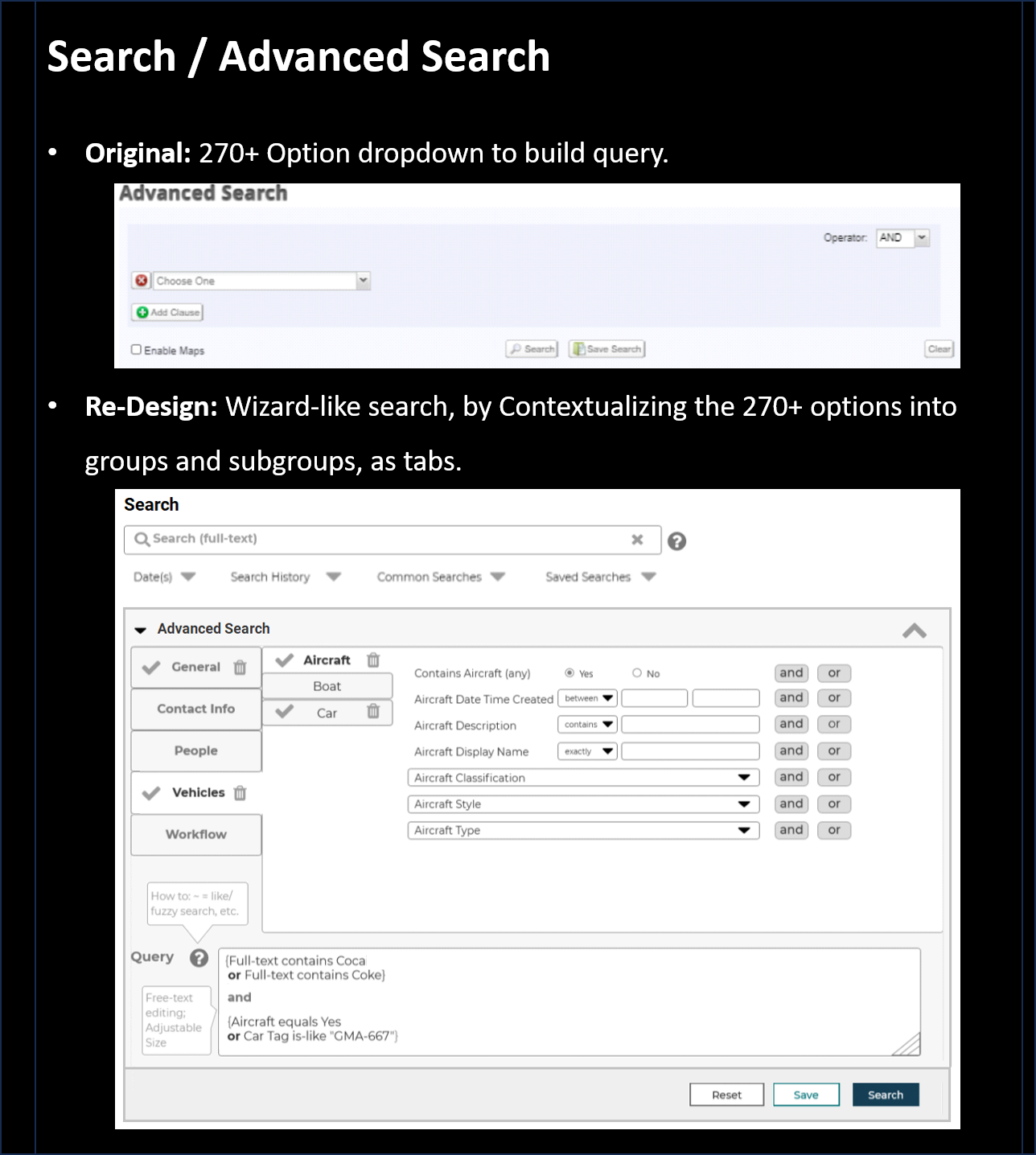
The legacy advanced search required people to build queries from a dropdown containing more than 270 options. The redesign organized those options into contextual groups and subgroups, making multiple selections and the resulting query easier to understand.
Redesign 3
Making status, progress, and available actions understandable
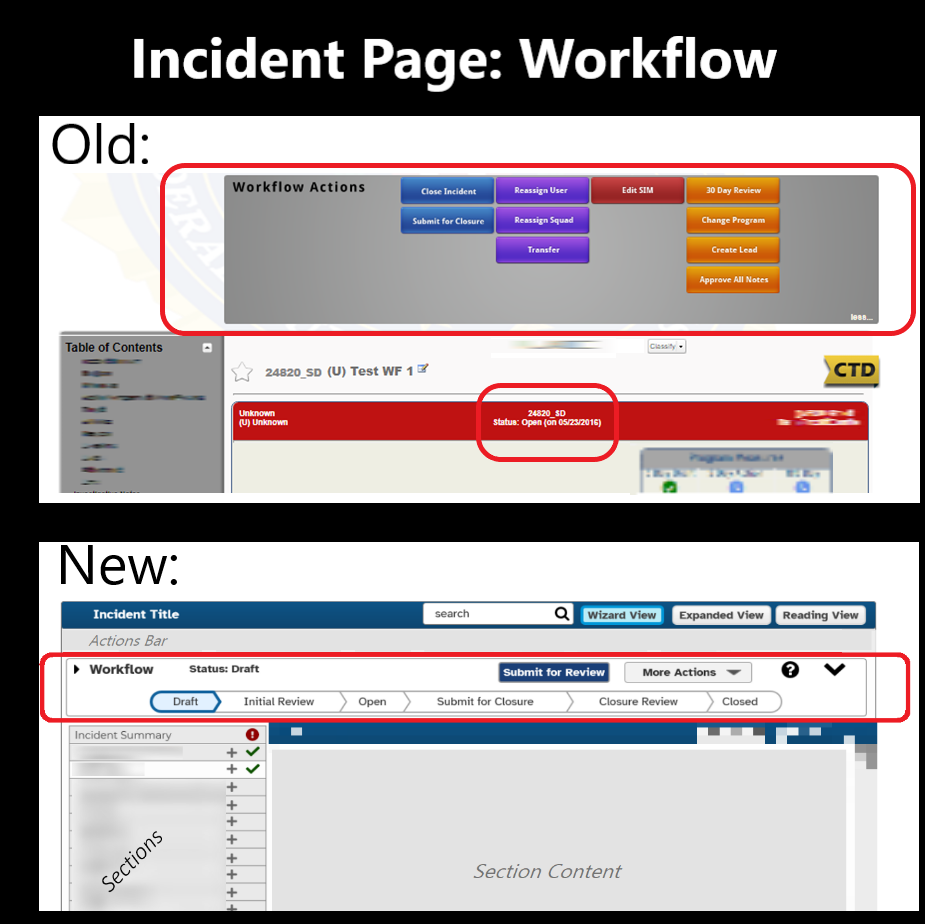
The original workflow obscured the current stage, possible next actions, and which roles could perform them. The redesign exposes progress through the application, identifies the current state, emphasizes the next primary action, and groups secondary actions.
Outcome
A more navigable and accessible first release
Version 1 received positive feedback and improved navigation, speed, usability, and access for users with disabilities. The iterative structure created a path for continued functional and accessibility improvements based on direct user engagement.
Why it matters
Inclusive participation changed the product
The work demonstrates how accessibility becomes stronger when it is treated as a design input rather than a final compliance check. Repeated collaboration with diverse users kept the application aligned with real needs while phased delivery made progress achievable.